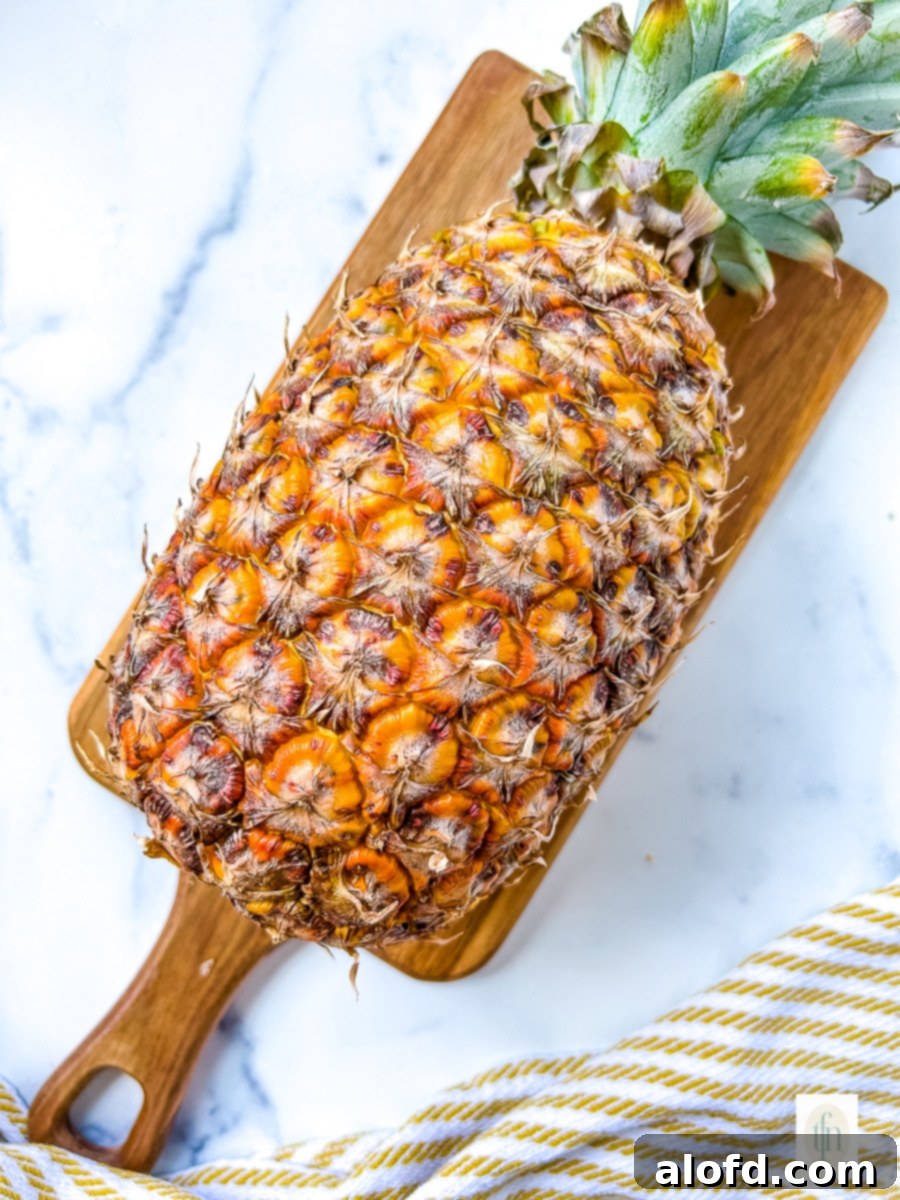
Unlocking the sweet, tangy goodness of a fresh pineapple might seem like a daunting task, but learning how to peel a pineapple and core it effectively is much simpler than you might imagine. With a few straightforward techniques, you can transform this spiky tropical fruit into a versatile ingredient for countless culinary creations, from refreshing juices to savory entrées and delectable desserts. Forget the pre-cut, often lackluster supermarket alternatives; mastering these basic skills will open up a world of fresh flavor and significant savings.
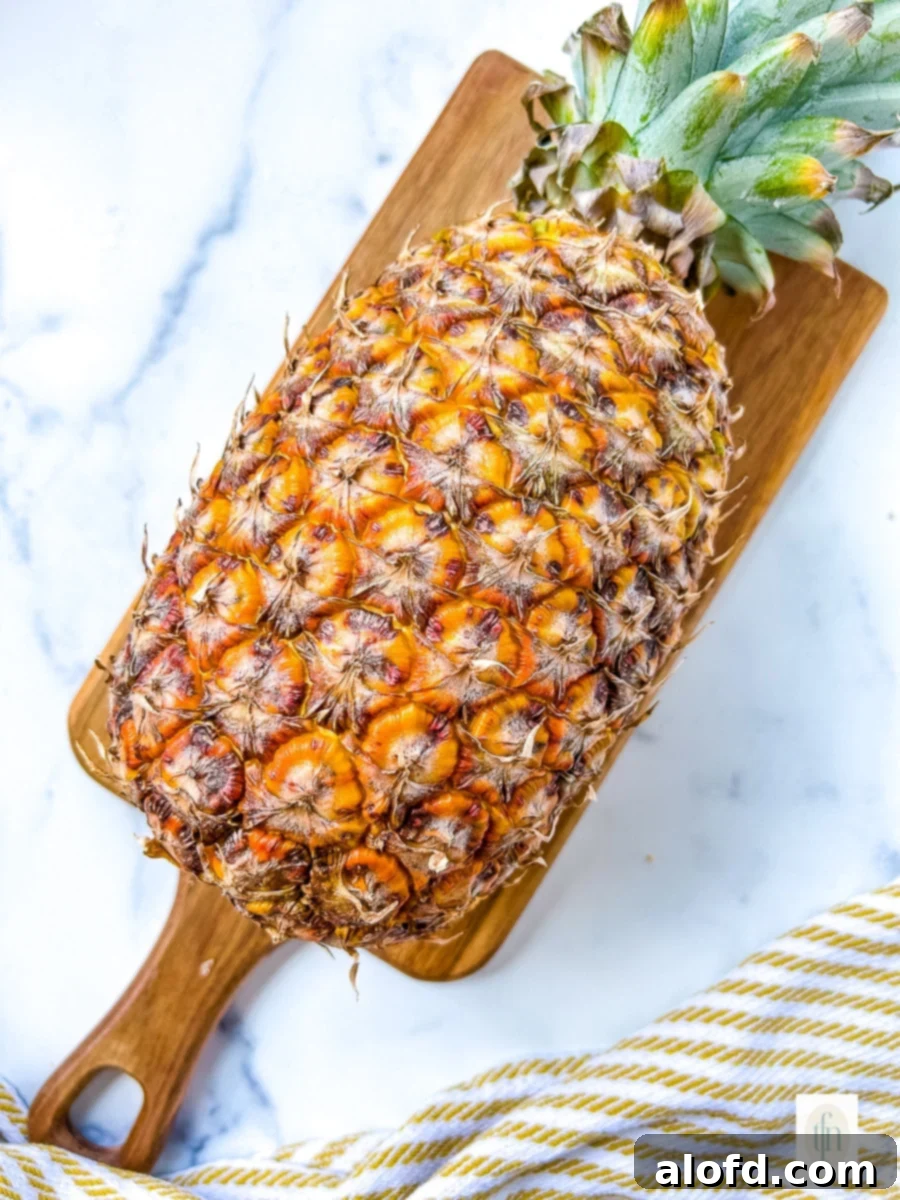
Why Choose Fresh? The Unrivaled Benefits of Peeling and Coring Your Own Pineapple
Embracing the art of preparing your own fresh pineapple offers a multitude of advantages that go beyond just a delicious treat. Here’s why it’s worth learning these essential kitchen skills:
- Significant Cost Savings: Buying a whole pineapple is substantially less expensive than purchasing pre-cut fruit. You get a far greater yield of fruit for your money, making it a budget-friendly choice for healthy eating.
- Reduced Food Waste: With the right tools and techniques, you can expertly peel and core a pineapple, ensuring you utilize as much of the succulent fruit as possible. This minimizes waste and maximizes your investment in fresh produce.
- Unmatched Flavor and Texture: Fresh pineapple boasts an exquisite taste and vibrant texture that simply cannot be replicated by canned versions. Its natural sweetness and tangy zest are perfect for enhancing a wide array of dishes. Imagine the burst of flavor in savory entrées like Instant Pot Pineapple Chicken or the tropical delight in desserts like Piña Colada No-Bake Cheesecake.
- Nutritional Powerhouse: Fresh pineapple is rich in Vitamin C, manganese, and bromelain, an enzyme known for its anti-inflammatory properties. Enjoying it fresh ensures you receive all these vital nutrients in their most potent form.
- Culinary Versatility: Once you master peeling and coring, fresh pineapple becomes an incredibly versatile ingredient. Use it in smoothies, salsas, grilled dishes, stir-fries, fruit salads, and more. The possibilities are truly endless.
Essential Insights Before You Start: Pineapple Prep Pointers
Is Coring a Pineapple Always Necessary?
Surprisingly, coring a pineapple isn’t always a mandatory step. Whether or not you need to remove the fibrous core depends entirely on how you intend to use the fruit. For instance, if you’re making pineapple bowls, the core can provide structural integrity to the shell. For dishes like pineapple fried rice, simply chop the fruit finely, core included, and toss it into the stir-fry. The heat and cooking process will soften the core, making it virtually unnoticeable.
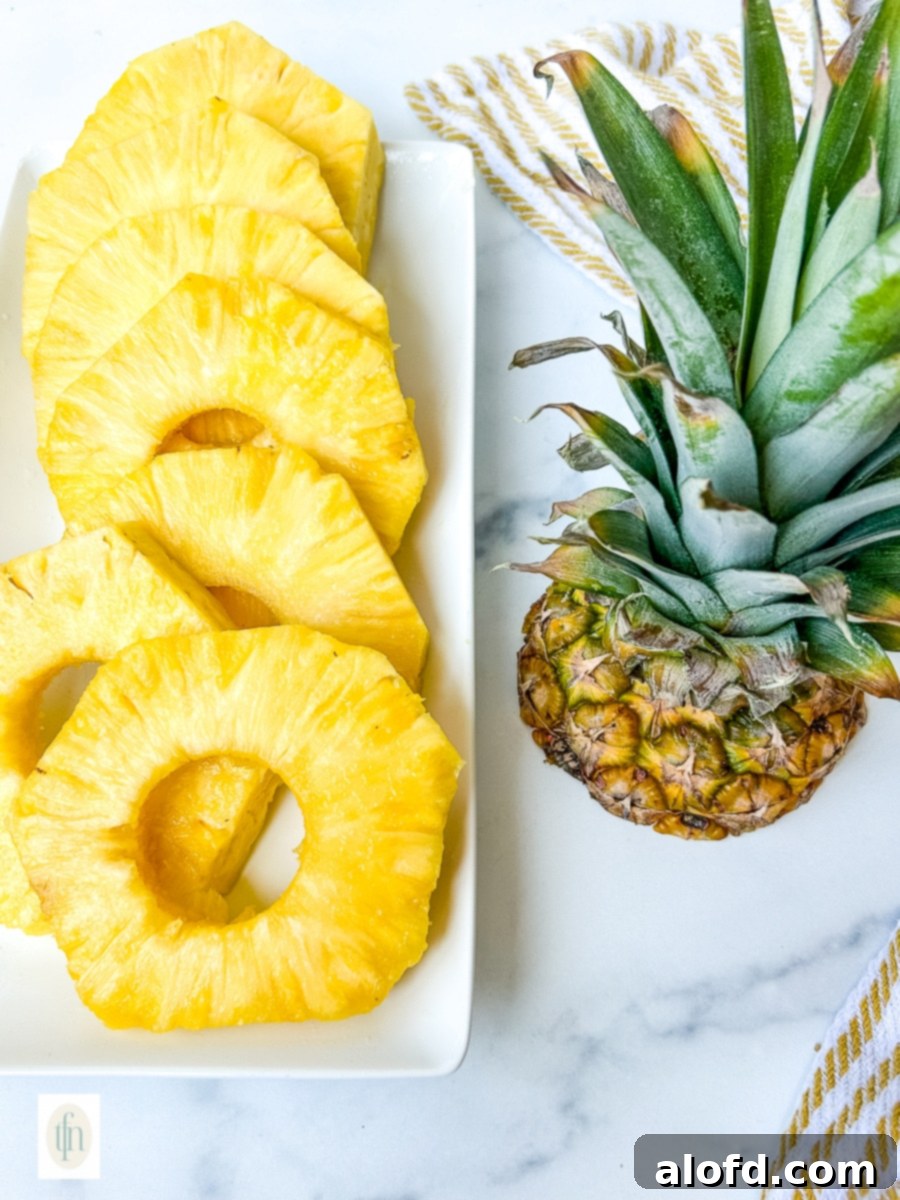
However, if your recipe calls for perfect rings (e.g., for an upside-down cake) or tender chunks for a fresh strawberry and blueberry salad, then mastering how to peel and properly core the pineapple to preserve as much juicy flesh as possible becomes crucial.
Juicing Fresh Pineapple: Core or No Core?
Similarly, if you’re planning to extract juice from your pineapple, removing the core is often unnecessary. In fact, if you’re using a juicing machine, the sturdy center can actually be beneficial. It provides valuable leverage, helping to push the fruit through the machine efficiently and extract every last drop of delicious nectar.
Homemade pineapple juice is exceptionally refreshing and vibrant, far superior to its canned counterparts. It’s delightful on its own, a fantastic addition to mixed drinks, and an excellent marinade – we particularly love using it in our Slow Cooker Ham with Coke and Dr Pepper Ham Recipe!
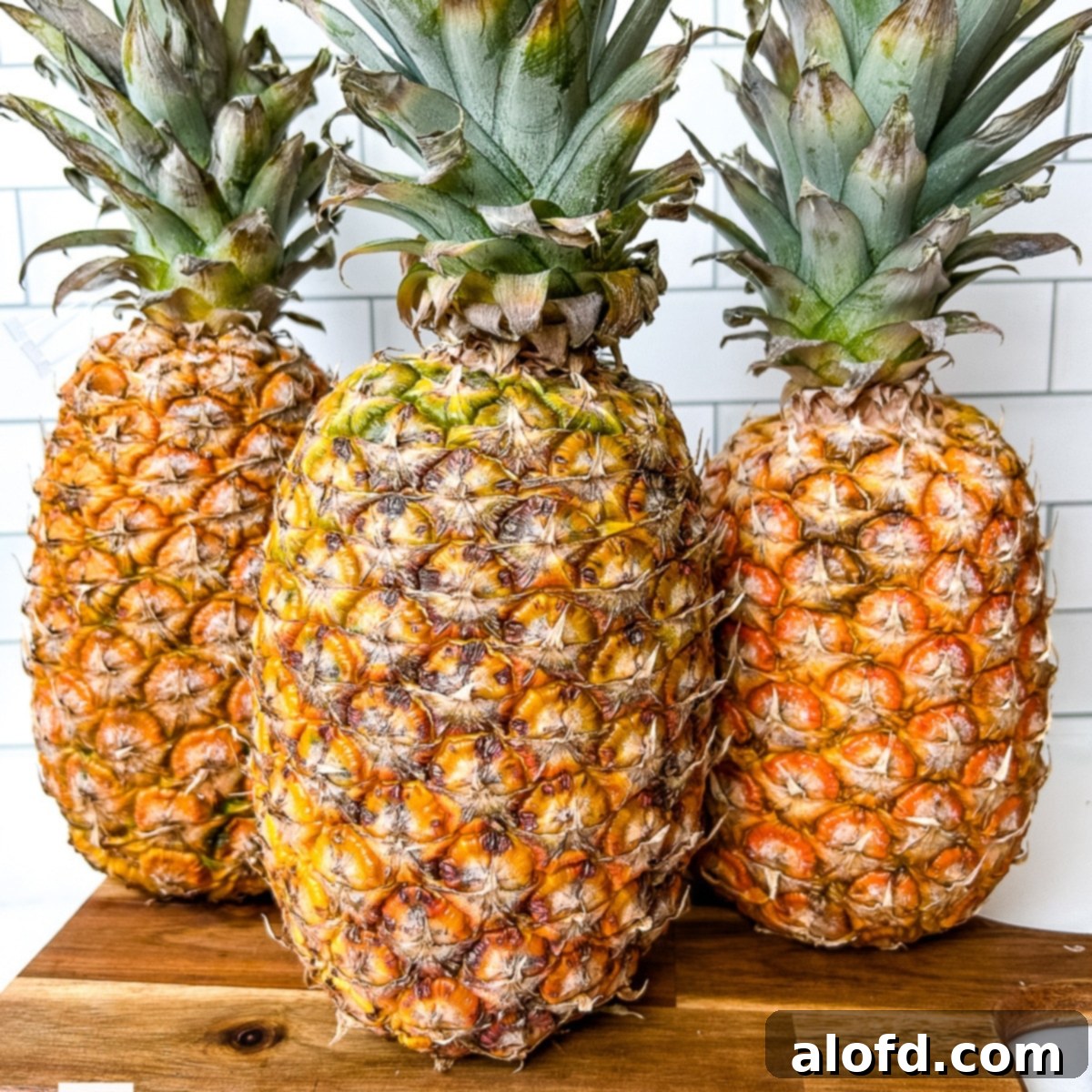
How to Choose the Perfect Pineapple: A Guide to Ripeness
Selecting a ripe pineapple is the first step to enjoying its full flavor. Here’s how to tell if it’s ready for peeling and coring:
- Color: As a pineapple ripens, its outer peel gradually transitions from green to a golden yellow, typically starting from the bottom and moving upwards. Look for a vibrant, consistent yellow hue across the majority of the fruit.
- Firmness: Gently squeeze the body of the pineapple. It should feel firm but yield slightly with a gentle give, similar to a ripe avocado. Avoid pineapples that are rock-hard or overly soft and mushy.
- Smell: Hold the pineapple to your nose and sniff the bottom. A ripe pineapple will emit a sweet, tropical aroma. If there’s no scent, it’s likely underripe. If it smells fermented or vinegary, it’s overripe.
- Leaf Test: For a quick check, try to pull a single leaf from the center of the crown. If it comes out with minimal effort, your pineapple is perfectly ripe. If it’s difficult to remove, it needs more time.
Mastering the Peel: A Step-by-Step Guide to Preparing Your Pineapple
Peeling a pineapple might look intimidating due to its spiky exterior, but with a sharp knife and a steady hand, it’s remarkably simple. Follow these steps for a perfectly peeled fruit:
Step 1: Create a Stable Base
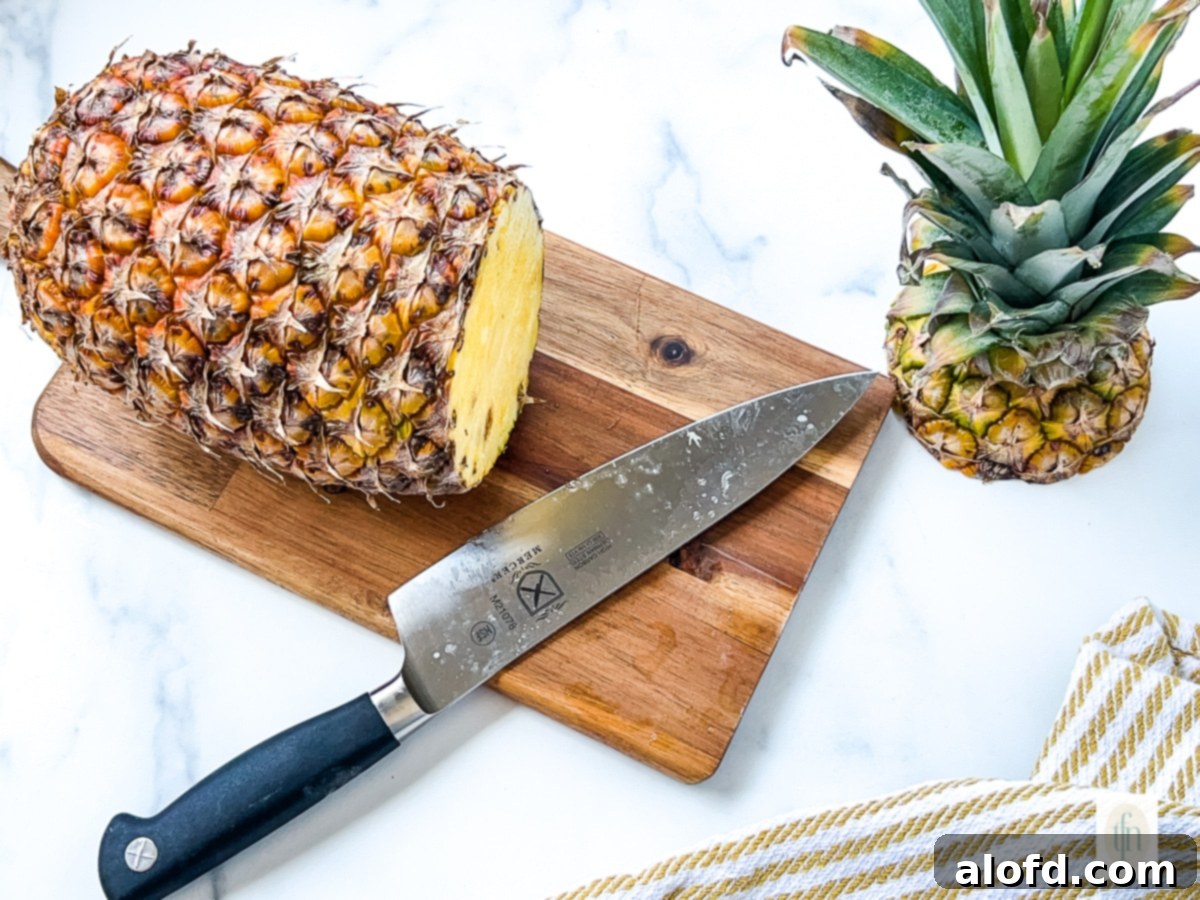
Before you begin peeling, it’s crucial to stabilize the pineapple. Using a sharp, large chef’s knife, carefully trim off the crown (the leafy top) and approximately 1/2-inch from the bottom base of the pineapple. This creates two flat, even surfaces, allowing the fruit to sit securely and prevent rolling on your cutting board. Safety first!
Step 2: Remove the Outer Skin
Stand the pineapple upright on one of its newly flattened ends. With your sharp knife, carefully slice downwards, following the natural curve of the fruit, to remove the thick, prickly outer peel. Aim to cut just deep enough to remove the skin, trying not to remove too much of the precious golden flesh. Work your way around the entire pineapple, rotating it as you go. Don’t worry about the small “eyes” at this stage; we’ll address those next.
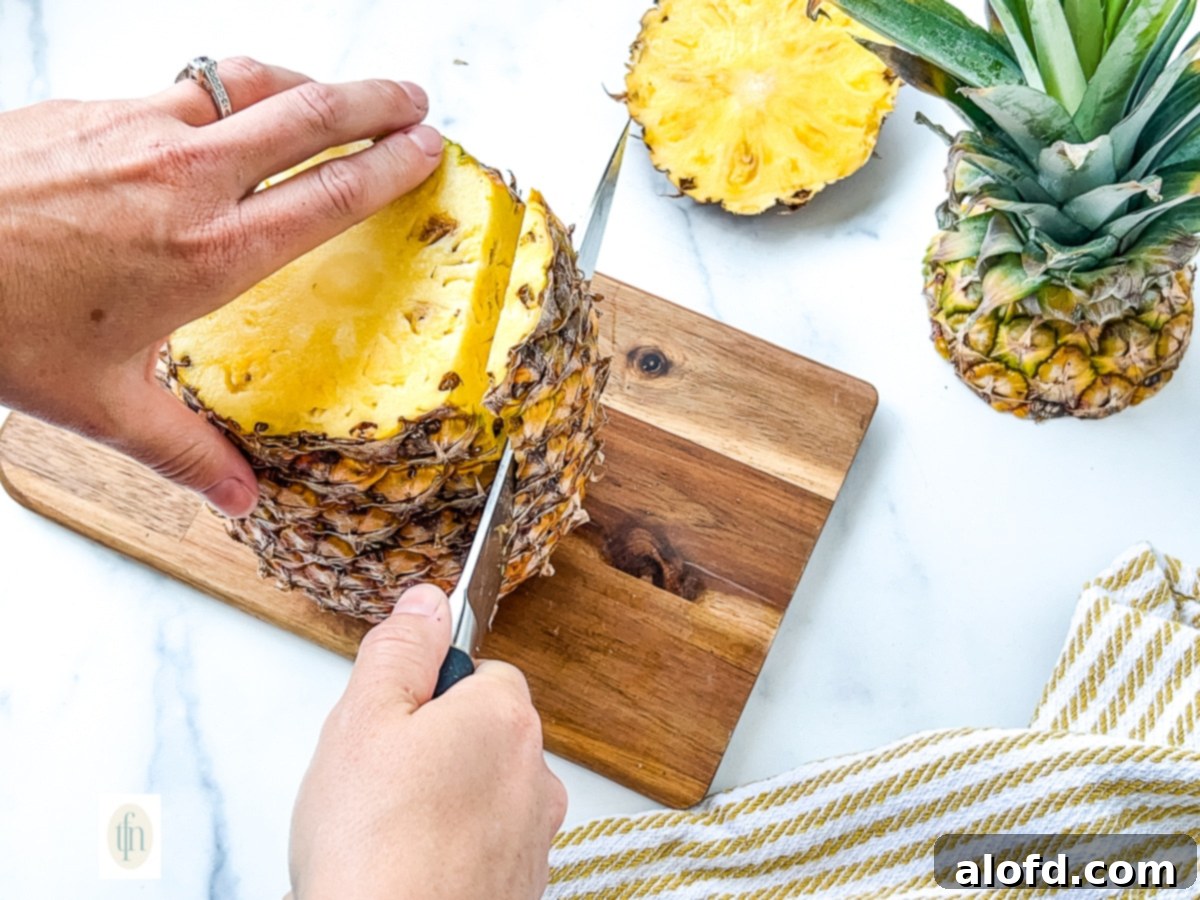
Step 3: Eliminate the “Eyes”
After the main peel is removed, you’ll notice small, brown “eyes” embedded in the flesh. You have two primary methods for removing these:
- Individual Carving (Minimal Waste): For those who want to conserve as much fruit as possible, use a small paring knife to meticulously carve out each individual ‘eye’. This method is slower but results in the least amount of wasted fruit.
- Diagonal Row Slicing (Faster Method): For a quicker approach, observe the pineapple closely. You’ll notice that the eyes align in distinct diagonal rows across the fruit. Using your paring knife, make a shallow V-shaped cut along one side of a diagonal row of eyes, and then another V-shaped cut along the other side. This allows you to lift out an entire strip of eyes with minimal effort. While slightly more flesh is removed with this method, it’s significantly faster, especially when preparing multiple pineapples.
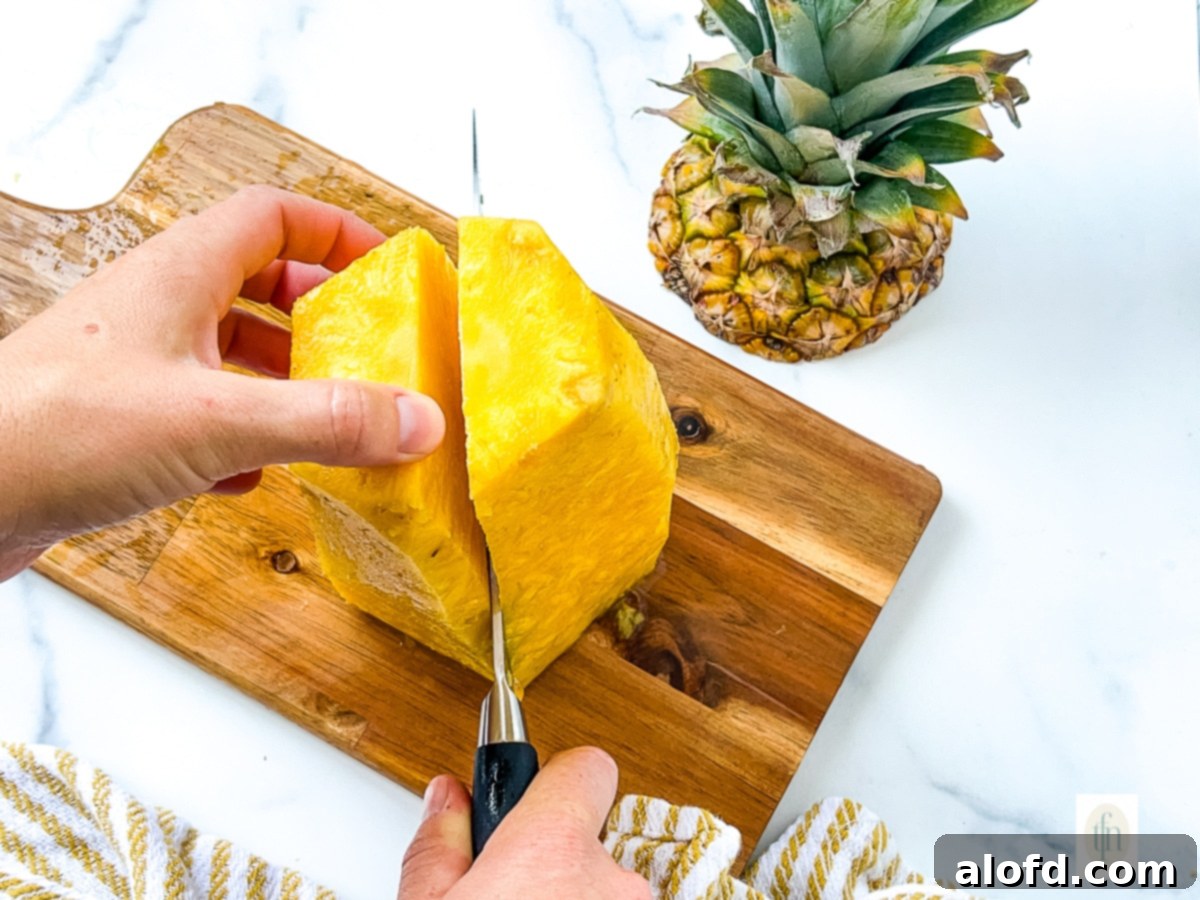
Mastering the Core: How to Core a Pineapple with Ease
Once your pineapple is peeled, the next step, if desired, is coring. The core is edible but very fibrous and can have an astringent taste, which is why many prefer to remove it. As with peeling, always begin by trimming both the top ½-inch and bottom ½-inch of the fruit to create stable, flat surfaces to work with.
- Method 1: Using a Pineapple Corer (Specialized Tool)
A pineapple corer is a handy gadget that makes quick work of core removal while simultaneously slicing the fruit into rings. Place the peeled pineapple upright on your cutting board. Position the corer’s blade directly over the center of the core. Slowly press down while twisting the handle, applying gentle pressure, until the corer cuts all the way through to the bottom. Once you’ve reached the bottom, slowly pull the corer back up through the fruit. You might need to wiggle it slightly to release the fruit. The spiral-cut pineapple rings will emerge, and the core will remain inside the corer (or be pushed out depending on the specific model).
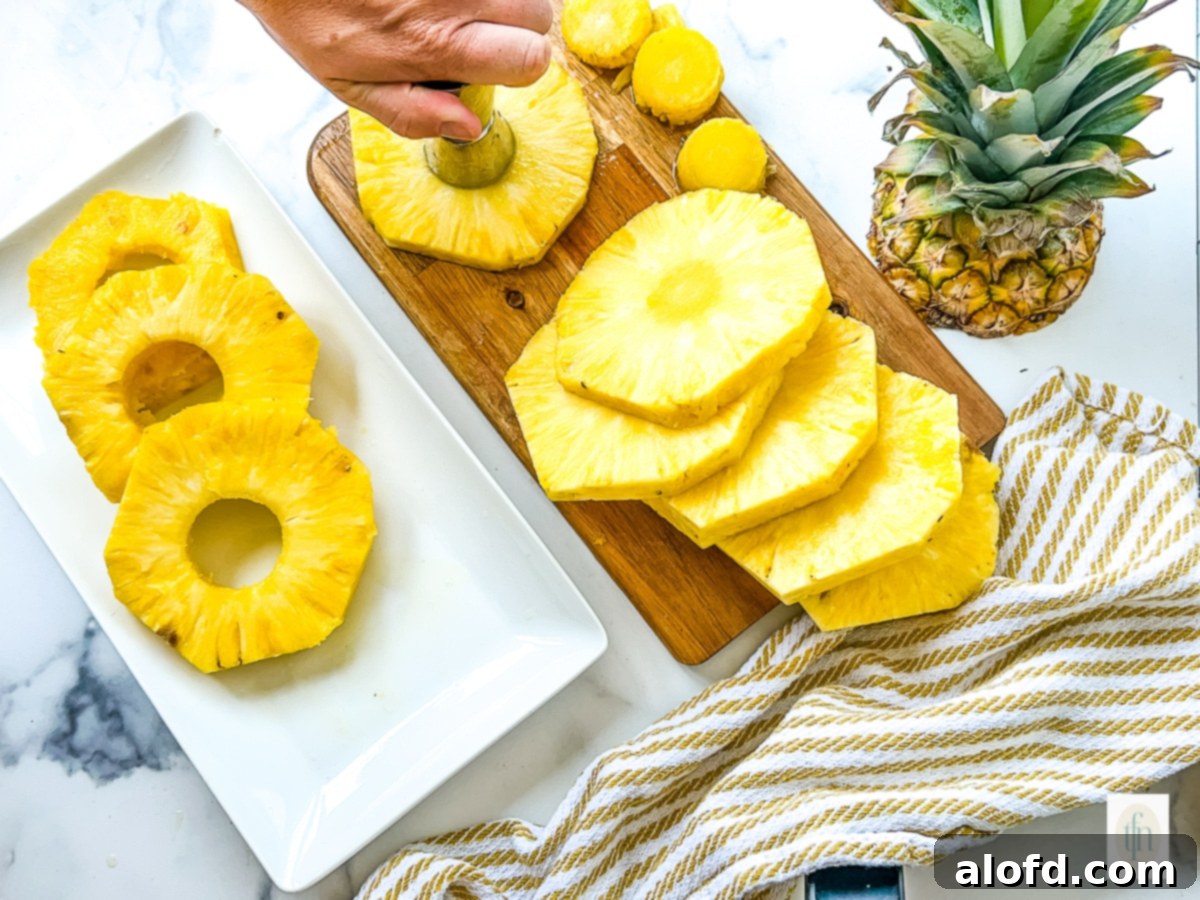
🎯 Pro Tip: Improvised Coring Tools
Don’t have a specialized pineapple corer? No problem! You don’t need expensive equipment. Anything with sharp edges and a diameter roughly the size of the core (about 1 inch) can work effectively. Excellent makeshift options include small metal cookie cutters, biscuit cutters, or even a shot glass/jigger, as demonstrated in the photo below. Just press and twist to remove the core sections.
- Method 2: Coring with a Knife (No Special Tools)
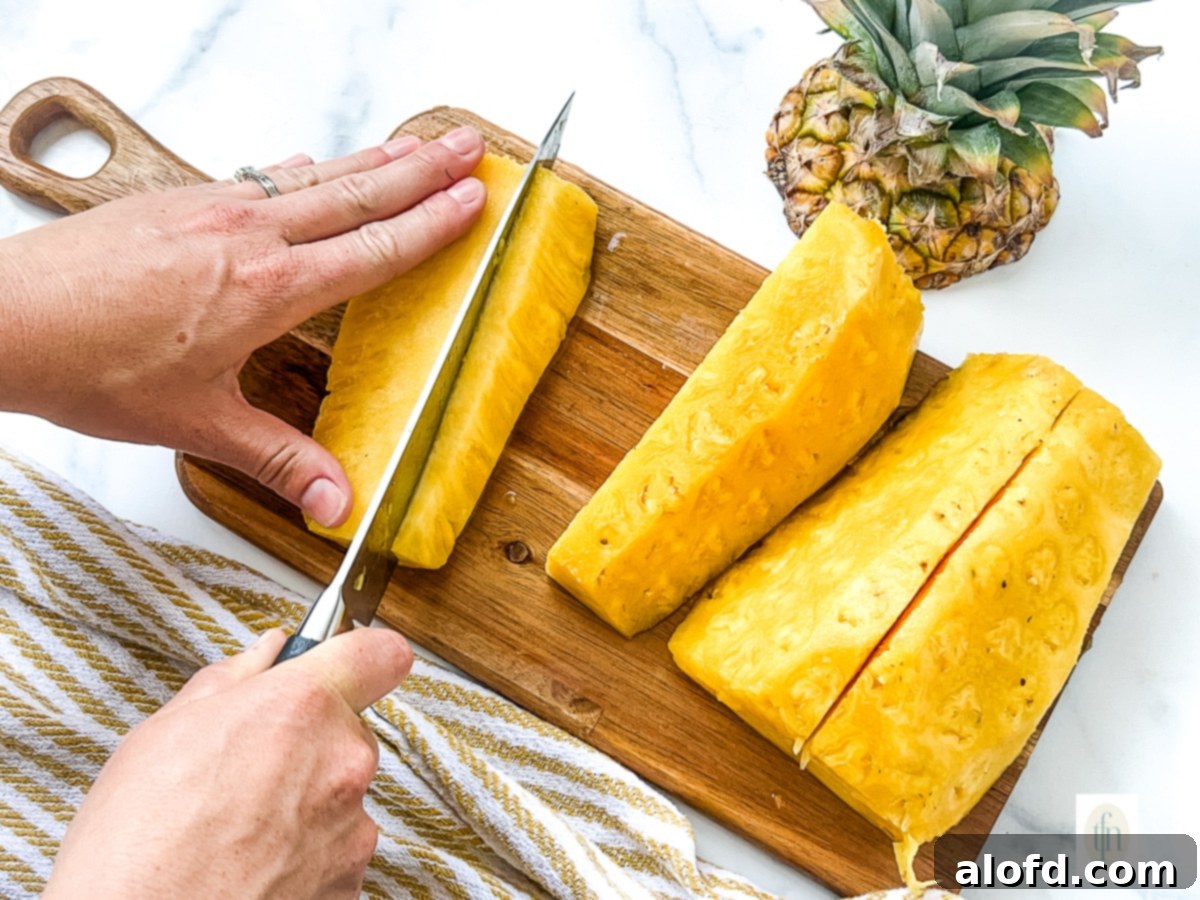
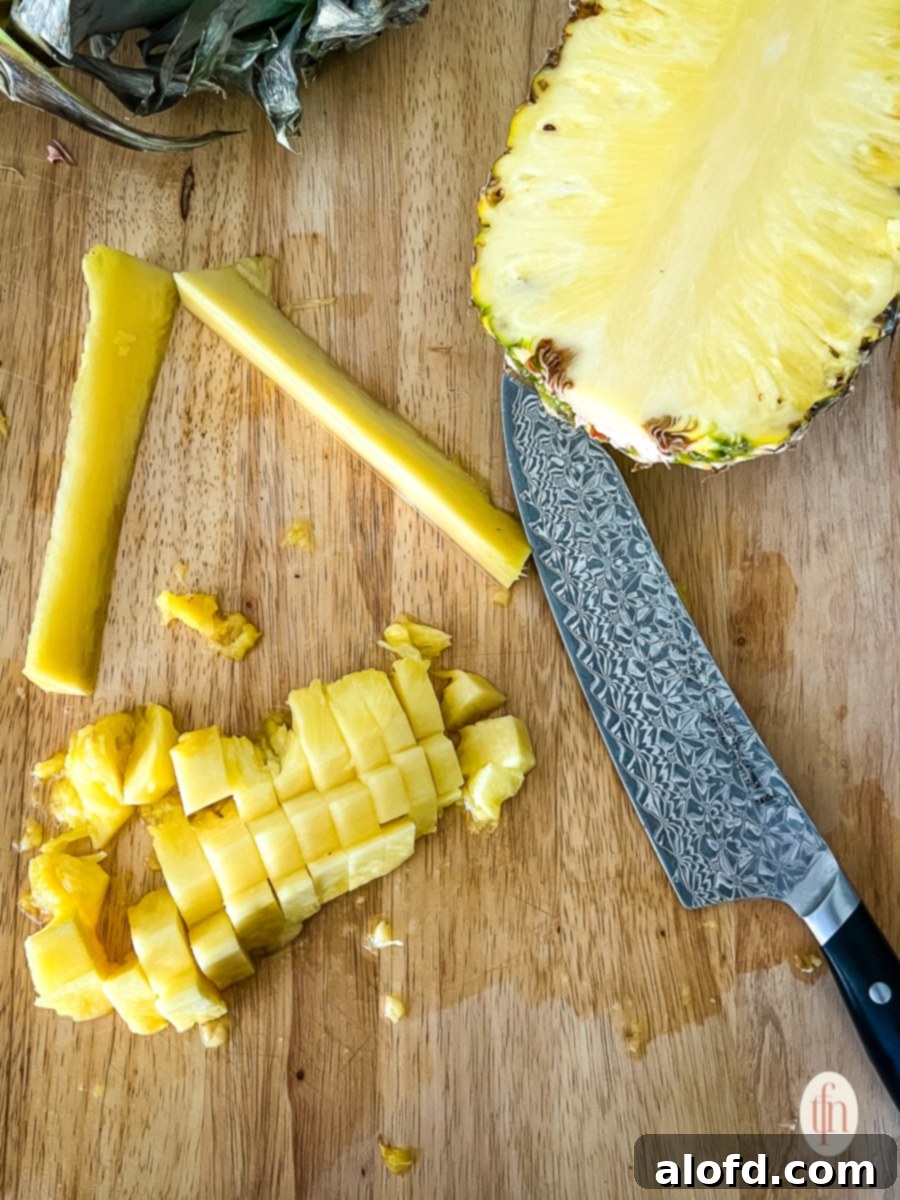
If you prefer to use a knife or don’t own a corer, this method is equally effective. After peeling the pineapple, stand it upright. Look down from above – you should easily see the round, slightly lighter-colored core at the center. Carefully insert your sharp knife just outside the edge of the core, angling it slightly. Work your way around the core, making a circular cut. Once the core is separated, you can simply push it out from the bottom.
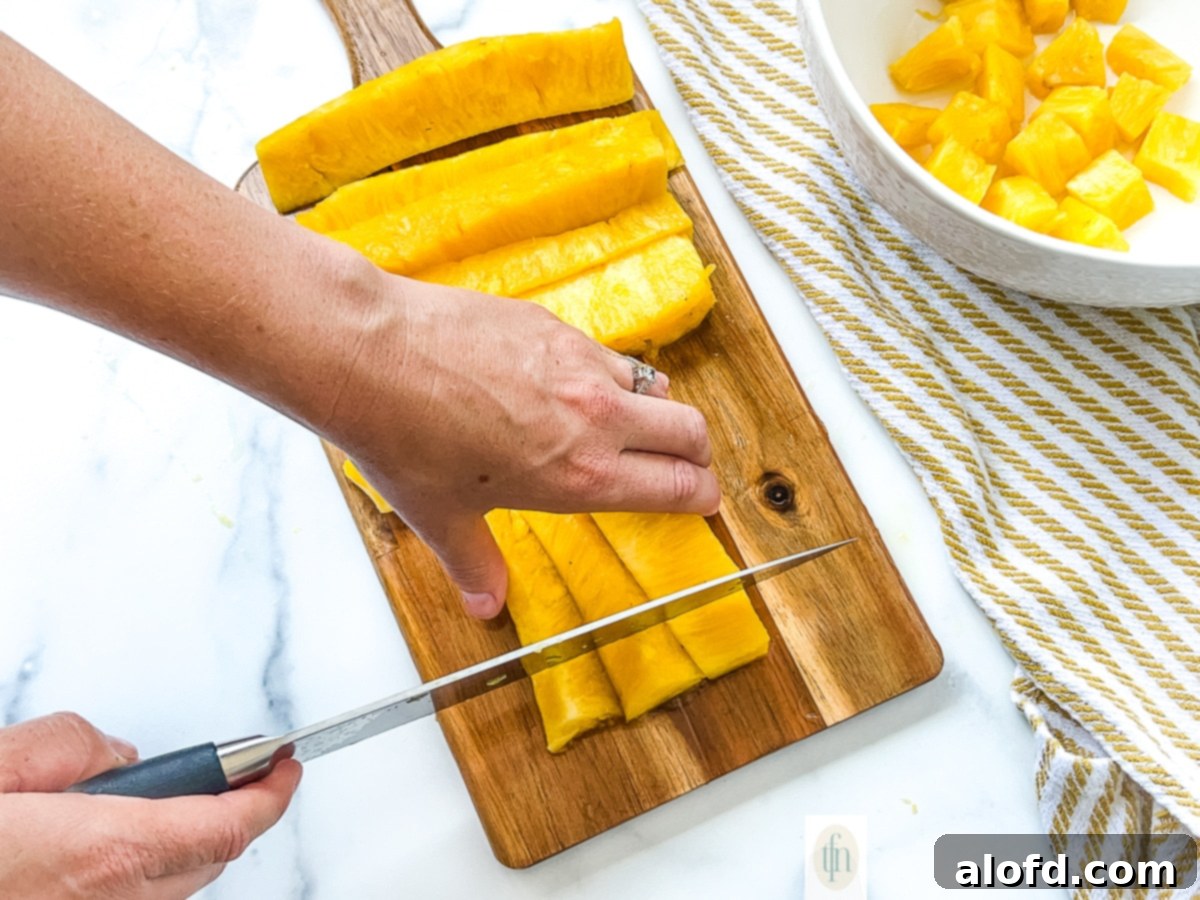
To make this process even easier and safer, you can first slice the peeled pineapple into halves or quarters lengthwise. Then, lay each section on its side and run your knife along the core to remove it. This provides better visibility and control, especially for beginners.
What Can You Do with the Pineapple Core? Is It Safe to Eat?
Yes, you can eat the pineapple core, and it even contains beneficial enzymes. However, it’s typically very fibrous and can sometimes have an irritating, almost numbing effect on the tongue and stomach due to its high bromelain content. It’s not something most people would enjoy eating on its own or in large quantities, but it doesn’t have to go to waste!
Here are some creative ways to utilize your pineapple core:
- Flavorful Garnish & Infusion: Chop it up or shave it down finely to use as a garnish for salads, or incorporate it into dressings, marinades, and simple syrups for a subtle tropical zing. You can also add it to a pitcher of water for a refreshing infused drink.
- Smoothie & Popsicle Boost: Boil the core until softened, then blend it to create a puree. This puree can be added to smoothies for extra fiber and nutrients, or used as a base for homemade popsicles.
- Fruity Ice Cubes: Cube the core and freeze it to use as flavorful ice cubes in cold, refreshing drinks. They’ll keep your beverage chilled without diluting the taste.
- Broth and Stock Enhancer: Add the core to vegetable or chicken broths for a hint of tropical sweetness.
Storing and Freezing Your Freshly Prepared Pineapple
Storing and Freezing
Once you’ve peeled and cored your pineapple, you’ll want to ensure its freshness. Properly stored, your cut pineapple can be enjoyed for an extended period:
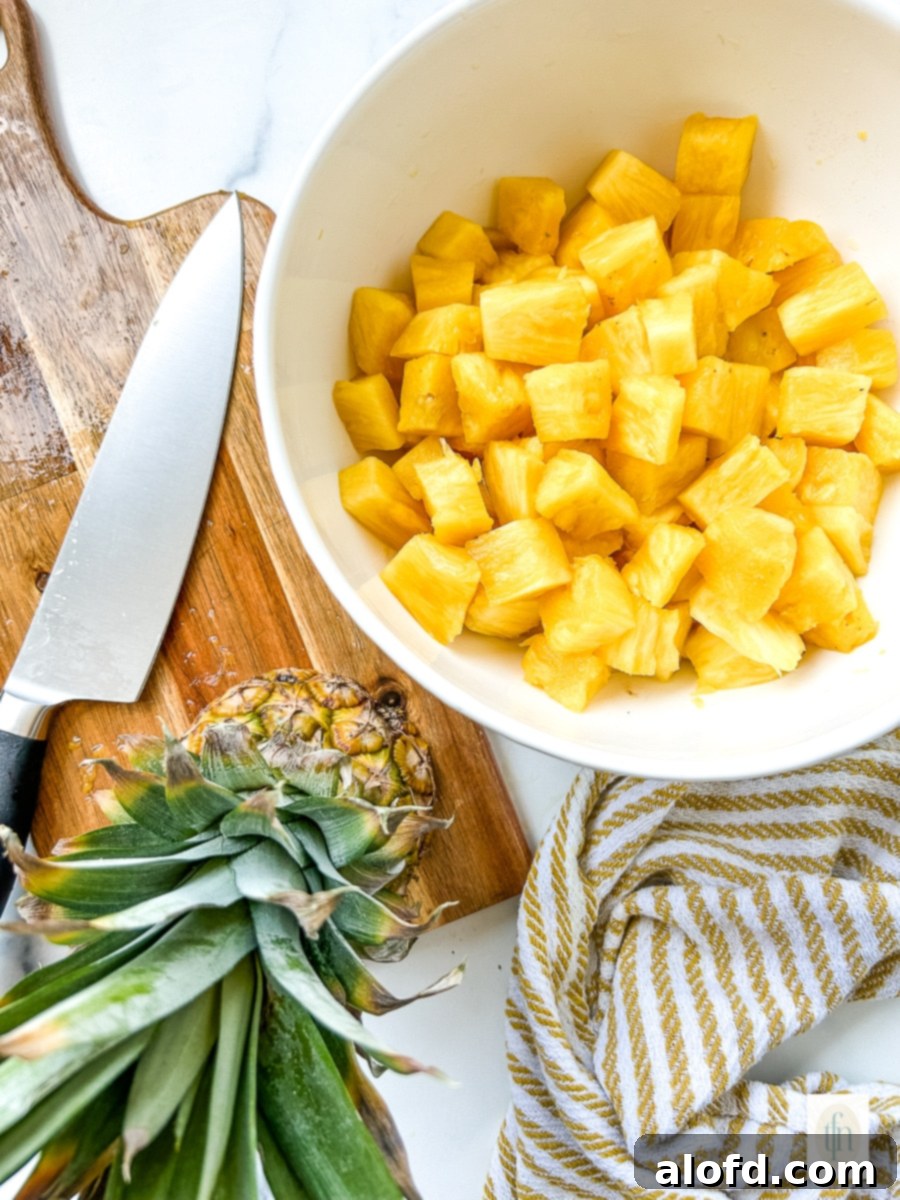
- Refrigeration: Place the cut pineapple pieces (chunks, rings, or spears) in an airtight container and store them in the refrigerator. They will remain fresh and delicious for up to one week.
- Freezing: For longer storage, pineapple freezes exceptionally well. Spread the pineapple chunks or pieces in a single layer on a baking sheet lined with parchment paper. Freeze for 1-2 hours until solid, then transfer the frozen pieces to a freezer-safe bag or airtight container. Frozen pineapple can be stored for up to a whole year.
Frozen pineapple chunks are incredibly convenient for making instant popsicles and smoothies, and often, you don’t even need to thaw them! If a recipe requires thawed fruit, the best method is to transfer it from the freezer to the fridge and let it thaw overnight. Alternatively, for a quicker thaw, place the frozen fruit in a zip-top food storage bag and submerge it in a bowl of cold water until defrosted.
Enjoying Your Fresh Pineapple: Culinary Inspiration
Now that you’ve mastered peeling and coring, your fresh pineapple is ready to be transformed! Here are just a few ideas to get you started:
- Sweet Treats: Add chunks to fruit salads, grill slices for a caramelized dessert, or blend into refreshing sorbets and ice creams.
- Savory Dishes: Incorporate into stir-fries, marinades for chicken or pork, vibrant salsas for fish tacos, or as a topping for Hawaiian-style pizza.
- Beverages: Juice it for a revitalizing drink, blend it into tropical smoothies, or use it to create exotic cocktails.
- Breakfast Boost: Mix into yogurt, oatmeal, or top your pancakes and waffles with fresh pineapple pieces.
With these simple techniques, you’ll find yourself reaching for fresh pineapple more often, enjoying its incredible flavor, health benefits, and versatility without any hesitation.
Need More Kitchen Hacks? We Love These Tips…
Looking to streamline your kitchen tasks even further? Check out these helpful guides:
- How to Make Shredded Carrots Easily
- Pan Roasted Jalapeno: A Simple Guide
- The Best Way To Cut A Pear for Any Occasion
- How to Tenderize Pork Chops – 3 Easy Methods for Juicy Results
If you tried these valuable tips for peeling and coring your pineapple or any other recipe on our website, please let us know how it went in the 📝 comments below. Your feedback is greatly appreciated! Thanks for visiting!